If your water in Kissimmee, Orlando, or anywhere in Central Florida smells or stains, the cause is almost always one of six things: iron, manganese, hydrogen sulfide, low pH, chlorine or chloramine residual, or a bacterial colony in the water heater. Each one has a different fix. This article walks through a step-by-step diagnostic so you can identify what you are seeing before you spend money on the wrong treatment.
Step one: look at the stain color
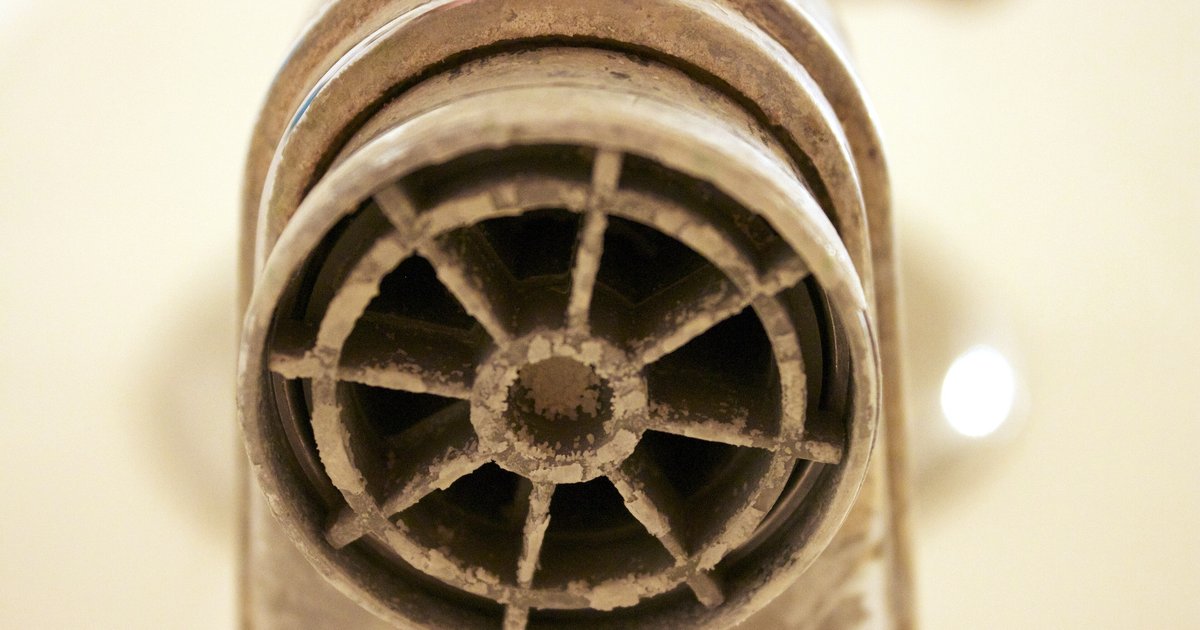
Orange or reddish-brown staining on porcelain, in toilet tanks, on white laundry, or around faucet aerators points to iron. Iron above 0.3 ppm in water is enough to leave a visible stain over time. Ferrous iron (dissolved) is the most common form in Central Florida well water; it is clear at the tap and oxidizes to ferric (visible) iron after it sits in contact with air. Ferric iron is already a particle when it leaves the tap and is the easier of the two to filter. Either form responds to air-injection oxidation (AIO) followed by a catalytic media bed. On municipal supply, iron staining is uncommon; if you see it, the iron is more likely from corroded household plumbing than from the utility.
Black or dark-brown staining points to manganese, often present alongside iron in Central Florida well water. Manganese above 0.05 ppm leaves visible stains. The treatment is the same AIO + catalytic media stack used for iron, sometimes with a higher pH set point because manganese oxidizes more readily above pH 7.5.
Blue or green staining around copper fittings or in tubs and sinks points to acidic water dissolving copper out of household plumbing. The Florida well water culprit is low pH (below 6.8). The fix is an acid neutralizer (calcite media) upstream of the rest of the treatment stack. On municipal supply, blue staining is rare because utilities corrosion-control the finished water; if you see it on city water, have the plumbing inspected.
White or chalky scale on fixtures, showerheads, and the dishwasher heating element is hardness from the Floridan Aquifer. The fix is a properly sized ion-exchange water softener.
Step two: smell on the cold versus the hot tap
Sulfur (rotten egg) smell on both the cold and the hot tap, with the smell strongest on the hot side, points to hydrogen sulfide gas in the source water. The biological origin is sulfate-reducing bacteria in the anaerobic zone of the well or in the deep aquifer. The treatment is AIO, the same system used for iron, with the sulfide oxidizing to elemental sulfur and dropping out into the media bed.
Sulfur smell only on the hot tap, with no smell on the cold, almost always points to a bacterial colony inside the water heater. The water heater anode rod (typically magnesium or aluminum) reacts with sulfate ions in the heater tank in the presence of sulfate-reducing bacteria to produce hydrogen sulfide. The fix is to flush the heater, then swap the anode rod for a powered (zinc-aluminum or electronic) anode that does not feed the bacteria. The smell typically disappears within a week of the swap.
Chlorine or pool smell, particularly on hot water, points to chlorine or chloramine residual from the utility. OUC and most Toho systems use free chlorine; Toho's Harmony system uses chloramines, which are more stable in the distribution loop and harder to remove at the home. A whole-house carbon filter is the right treatment, with catalytic carbon on chloraminated supply.
Step three: taste
Metallic taste points to iron, copper, or other metals. Confirm with a test panel. Iron and copper both show up at low ppb levels in taste before they reach the threshold of visible staining.
Salty taste, particularly noticeable when you have not added salt to food, points to sodium or chloride above background. On municipal supply this is rarely a problem outside coastal saltwater intrusion zones. On a well, sodium or chloride above 250 mg/L is the EPA secondary standard for chloride and is a sign of saltwater intrusion or contamination from a nearby brine source.
Bitter or "harsh" taste points to magnesium or sulfate above the secondary standard, or to high TDS in general. Central Florida municipal supply commonly runs 200 to 500 ppm TDS. Anything above 500 ppm starts to taste noticeably. The fix at the kitchen sink is reverse osmosis.
Earthy or musty taste points to surface-water source (less common in Central Florida) or to a biofilm in the household plumbing. If it is intermittent and only at one fixture, flush the line at that fixture and clean the aerator. If it is at every tap, the issue is upstream of the home.
Step four: time of day and season
Worse-tasting or worse-smelling water in the morning, after the household has been still overnight, points to stagnation in the household plumbing. Flush each fixture for 30 to 60 seconds before drinking in the morning if you are on a well, particularly if you have lead solder in older plumbing (lead solder in plumbing was banned in the U.S. in 1986; homes from before that have lead-solder risk in their copper joints).
Worse-tasting or smellier water in summer, particularly on municipal supply, points to seasonal disinfection adjustment by the utility. Warmer source water requires more aggressive disinfection, which can drive up trihalomethane and haloacetic acid by products. OUC and Toho both publish quarterly disinfection by product data on their CCRs.
Step five: where the symptom shows up
If the symptom is only at the ice maker (cloudy ice, off taste in ice, scale in the ice bin), the cause is the supply line to the fridge or a fouled fridge inline filter. Replace the fridge filter on schedule (every six months for most models) and verify the inline shutoff at the wall is fully open. If you have an under-sink RO, tee the fridge line off the RO storage tank for crystal ice.
If the symptom is only at the kitchen tap (chlorine taste, sediment, TDS), an under-sink filtration or RO upgrade fixes it without touching the whole-house plumbing. If the symptom is at every fixture in the house, it is upstream of the home or at the main water line and needs point of entry treatment.
Putting the diagnostic together
Run through the five steps in order: look, smell, taste, when, and where. You will land in one of about a dozen common cases:
- Orange staining everywhere + sulfur smell on both taps = well water with iron and hydrogen sulfide; install AIO + softener.
- Orange staining everywhere + no smell = well water with iron; install AIO + softener.
- No staining + sulfur smell only on hot tap = water heater anode rod problem; flush heater and swap anode.
- White scale everywhere + chlorine smell = municipal supply with normal Central Florida hardness; install softener + catalytic carbon.
- Blue or green stains on fixtures = acidic well water; install neutralizer + softener.
- Cloudy ice and bad-tasting drinking water only = under-sink RO at the kitchen tap.
- Earthy taste at one fixture = local biofilm; clean aerator and flush.
If your symptoms do not match any of these, or if you have multiple symptoms at once, the test is the next step. We do not size a stack from a phone call. A real on-site test takes 30 to 45 minutes and we do not charge for it. Schedule a free water test or call (407) 773-2883.
What not to do
Do not pour bleach into the well casing without testing first. Shock chlorination is the right step for bacteria, but it should be done by someone who has the chlorine dose and contact time right. Wrong-dose shock chlorination either misses the contamination entirely or damages the well casing and pump.
Do not buy a treatment system off a price list before testing the water. Every well in Central Florida is different. A stack that worked for your neighbor may not be the right stack for you.
Do not assume the stain or smell is harmless because it has always been there. Iron and sulfur are aesthetic problems on their own, but they sometimes mask underlying bacterial or nitrate contamination. The Florida Department of Health recommends annual private well testing for bacteria and nitrate at minimum. If you have not run that test in the last 12 months, run it.
Recommended method: symptom-to-action table
Use this table to map what you are seeing or smelling at the tap to the treatment Pure Agua typically installs in Central Florida homes. Pricing is industry-standard installed range; a written quote follows the on-site test.
| Symptom | Likely cause | Recommended action | Installed range |
|---|---|---|---|
| Orange stains, no smell | Iron 0.3 to 5 ppm | Air-injection oxidation (AIO) + softener. See well water guide. | $3,500 to $5,500 |
| Black or brown stains | Manganese 0.05+ ppm | AIO with pH adjustment + softener. | $3,800 to $5,800 |
| Rotten-egg smell on both taps | Hydrogen sulfide | AIO oxidation + catalytic carbon polish. | $3,500 to $5,500 |
| Rotten-egg smell only on hot tap | Water heater anode reaction | Flush heater, swap anode rod. DIY-friendly. | $30 to $80 part cost |
| Blue or green stains | Low pH dissolving copper | Calcite acid neutralizer at point of entry. | $1,200 to $2,400 |
| White scale, chlorine smell | Hard chlorinated city water | Softener + carbon (catalytic on chloraminated supply). See hard water guide. | $3,000 to $6,000 |
| Cloudy or off-tasting drinking water only | TDS, chlorine residual, taste/odor | Under-sink reverse osmosis. See RO guide. | $400 to $1,200 |
Utility context for Central Florida
The big municipal suppliers across our service area draw mainly from the Floridan Aquifer and post their results in annual Consumer Confidence Reports. Orlando Utilities Commission, Toho Water Authority (which serves Kissimmee), Orange County Utilities, the City of Sanford, and others each publish their own CCR every year on their utility websites; pull yours before assuming your symptom is sourced from the supply. Common city-water symptoms in 2026: chlorine taste and smell, seasonal disinfection-byproduct increases in summer (typical of warmer surface-water periods), and modest hardness at the tap. Iron, manganese, and hydrogen sulfide on city water are unusual and usually point at premise plumbing or a water-heater problem rather than the utility.
On private wells, the picture is different. Most private wells in Osceola, Orange, Lake, Polk, and Seminole counties tap the Floridan Aquifer directly and bring up water with measurable hardness, frequent iron and manganese, occasional hydrogen sulfide, and pH that can run on either side of neutral. The Florida Department of Health recommends annual private well testing for bacteria and nitrate at minimum, and a broader chemical panel every three to five years. We pull samples on every consultation.
Call a professional if...
The diagnostic table covers the common cases. Call Pure Agua or another licensed Central Florida water-treatment company if any of these apply:
- You have multiple symptoms at once (staining plus smell plus taste change).
- The symptom appeared suddenly with no change in plumbing, fixtures, or utility supply.
- You are on a private well and have not tested for bacteria and nitrate in the last 12 months.
- You see visible particulate or any colored discharge from a fixture that has been still overnight.
- You are pregnant, have an infant in the household, or have an immunocompromised resident, and are unsure whether your water is safe.
- You are buying or selling a home and need a documented water-quality test on a private well for the transaction.
None of these are emergencies for most households, but they are situations where guessing at the cause is more expensive than testing.
Frequently asked questions
Why does my hot water smell like sulfur but the cold does not?
That symptom is almost always the magnesium or aluminum anode rod inside the water heater reacting with sulfate ions and sulfate-reducing bacteria in the tank to produce hydrogen sulfide. The fix is to flush the heater, then swap the rod for a powered or zinc-aluminum anode that does not feed the bacteria. The smell typically disappears within a week of the swap.
Is iron in well water harmful or just an aesthetic problem?
Iron itself is an aesthetic problem at the levels seen in most Central Florida wells. The concern is that iron and manganese sometimes correlate with the presence of iron-reducing bacteria, and the same anaerobic conditions in a well that produce dissolved iron can also support sulfate-reducing bacteria and biofilms. Testing tells you whether the bacteria are present; treatment removes both the iron and the conditions.
Will a softener fix orange staining?
A softener will hold up to about 3 ppm of clear (ferrous) iron, but it is the wrong tool above that level or for any visible (ferric) iron. Above 3 ppm, the resin fouls inside 12 to 18 months and the softener stops softening. The right stack for Central Florida well iron is air-injection oxidation upstream of the softener. The AIO removes the iron; the softener handles hardness only.
My city water tastes like a swimming pool. What is going on?
OUC, Orange County Utilities and most Toho systems use free chlorine as the distribution disinfectant. Toho's Harmony system uses chloramine (chlorine plus ammonia), which is more stable in the distribution loop and harder to remove at the home. A whole-house carbon filter reduces chlorine across every fixture, with catalytic carbon (not standard GAC) on chloraminated supply. Under-sink RO handles the kitchen tap.
How fast can a contamination problem get worse without treatment?
Iron staining and chloramine taste are stable; they do not get worse on their own. Bacterial contamination on a private well is the exception and can change rapidly after heavy rain, septic events, or pump-related infiltration. The Florida Department of Health recommends annual coliform testing on every private well in the state; we run that test free on every consultation.
Background reading
For deeper background on each case, see our Florida well water guide (the full well stack), Central Florida hard water guide (softening), reverse osmosis guide (point of use drinking water), and the Osceola and Orange County well water article. For the cost side of treatment see water softener cost in Central Florida, and for the regulation side see PFAS in Central Florida drinking water.
Questions About Your Water?
Pure Agua offers free in-home water testing throughout the Kissimmee and Orlando metro area.
Schedule Free Water Test