If your Orlando-area tap water smells like rotten eggs, the cause is almost always hydrogen sulfide gas (H2S) somewhere in the system. On Floridan Aquifer well water it is naturally occurring and needs upstream treatment. On city water served by OUC, Orange County Utilities, or Toho Water Authority it is almost always sulfate-reducing bacteria living inside the water heater, not the supply line. A quick hot-only vs cold-only test in the kitchen tells you which one you have, and from there the fix is straightforward. This article walks the diagnostic in order.
The first test: hot only, cold only, or both
Before you call anyone, run this test at the kitchen sink. Open the cold tap. Wait a minute. Sniff a glass of cold water at arm's length. Then run the hot tap, fill another glass, and sniff that one separately. The pattern of the smell is the diagnostic.
Hot only: the odor source is the water heater. Sulfate-reducing bacteria are reacting with the magnesium sacrificial anode rod and producing H2S inside the tank. The supply water is fine.
Cold only or both: the odor is in the supply line. If you are on a private well, that is naturally occurring H2S from the Floridan Aquifer. If you are on city water and the smell is at the cold tap, the cause is rarer (a stagnant section of premise plumbing, a contaminated softener, or a service-line issue) and needs a site visit.
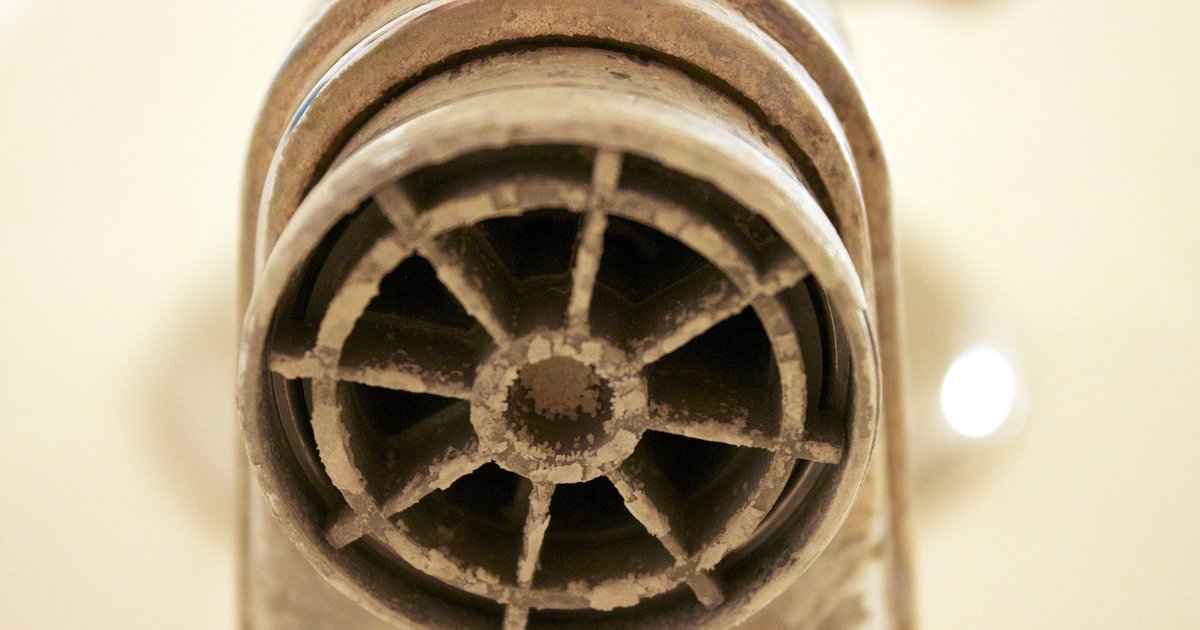
Smell at one tap only: the issue is downstream of the supply, often a faucet aerator with bacterial growth or a contaminated drain releasing sewer gas back into the air at the sink (sewer gas is also H2S but is not coming from the water itself). Clean the aerator, flush the trap, smell again.
Recommended method: matching the cause to the fix
| Where the smell shows up | Likely cause | Right fix |
|---|---|---|
| Hot tap only, both kitchen and bathrooms | Sulfate-reducing bacteria in water heater, reacting with Mg anode | Replace Mg anode with aluminum-zinc anode; chlorine shock the heater |
| Cold and hot taps on a private well in Apopka, east Orlando, or rural Orange | Naturally occurring H2S in Floridan Aquifer water | Air-injection oxidation (AIO) filter upstream of softener, sized to your sulfide concentration |
| Cold and hot taps on Toho Water in Kissimmee or Poinciana | Background H2S in Toho source water plus a fouled premise softener or fouled water heater | Service the softener, shock the heater, add catalytic carbon at the main if persistent |
| One tap only, drain area smells | Sewer gas from a dry P-trap or biofilm in faucet aerator | Clean aerator, run all unused fixtures monthly to keep traps wet |
| Whole-house smell intensifies after softener regen | Bacterial growth in softener resin bed (especially on well water) | Resin sanitization cycle and chlorine pellet feeder, or AIO upstream |
For background on Central Florida source water, including why H2S is common in Floridan Aquifer wells, see our Floridan Aquifer guide.
Why the water heater is the usual Orlando-city culprit
Every standard residential water heater ships with a magnesium sacrificial anode rod. The anode dissolves preferentially over the steel tank wall and protects the tank from corrosion. That is the design. In Florida groundwater chemistry, sulfate-reducing bacteria (SRB) that live harmlessly in trace amounts in many water supplies can colonize the warm, low-oxygen environment inside a hot-water heater. SRB metabolize the magnesium from the anode and produce hydrogen sulfide gas as a byproduct. The H2S dissolves into the hot water and you smell it the moment the tap opens.
The fix is two-step. First, drain the heater and replace the magnesium anode rod with an aluminum-zinc rod. Aluminum-zinc anodes do not feed SRB the same way and almost universally eliminate the smell within 24 to 72 hours. Second, chlorine-shock the tank to kill the existing bacterial population: turn off the heater, drain a few gallons, add a quart of household bleach through the anode port, refill, and let it sit overnight before flushing through the hot taps. The anode swap is a 60 to 90 minute job for a plumber or a competent DIYer. Anode rods cost $30 to $60 at any plumbing supply.
One catch: if your heater is more than 8 to 10 years old and the existing magnesium anode is more than half consumed, the smell is the early warning that the tank is approaching end of life. Replacing the heater (and selecting one with an aluminum-zinc anode from the factory, or swapping the anode at install) is more cost effective than another year of SRB management.
Why the well is the usual Apopka, east Orlando, and rural Orange culprit
The Floridan Aquifer system, the source for most private wells across Central Florida, naturally produces hydrogen sulfide as part of normal subsurface biogeochemistry. Wells in Apopka, east Orange near Christmas, parts of Seminole County, and the rural fringe of Osceola routinely test 0.5 to 5 mg/L of total sulfide at the wellhead. Above 0.3 mg/L the odor is noticeable; above 1 mg/L it is unmistakable.
The treatment is air-injection oxidation, often called AIO. An AIO filter draws a small bubble of air into the top of a media tank ahead of the household plumbing. The air oxidizes dissolved H2S into elemental sulfur, which the media bed captures. The system backwashes itself overnight, flushes the captured sulfur to drain, and rebuilds the air pocket on its own. AIO filters installed in Central Florida typically run $1,800 to $3,500 and handle sulfide loads up to about 5 mg/L. Above 5 mg/L, an oxidizer feed (chlorine or peroxide) followed by a contact tank and carbon polish is the right answer.
On a well, the AIO has to be upstream of the softener. H2S poisons softener resin quickly; the savings from skipping AIO disappear within 12 to 18 months when the resin is dead and the softener has to be re-bedded. The Florida well water guide covers the full multi-stage stack.
Why Toho and OUC city customers occasionally smell sulfur at the cold tap
Toho Water Authority's source water carries background H2S that is mostly stripped at the treatment plant. Occasionally, on long stagnant runs (vacation homes in Poinciana, second homes near Disney that sit empty for weeks), the residual sulfide and the chloramine disinfectant interact in the premise plumbing and produce a faint sulfur note at the cold tap. The fix is simple: flush the home thoroughly when you return, run every tap for two to three minutes, and the smell clears.
OUC and Orange County Utilities customers rarely report sulfur at the cold tap. When they do, the cause is almost always a fouled in-home softener resin bed that has gone too long without regeneration, or a brine tank that has bridged and is not regenerating effectively. Service the softener; the smell goes away.
What does not work, and why
Two common DIY responses to a sulfur smell are worth flagging because they make the problem worse.
Removing the water heater anode and not replacing it. This kills the bacterial reaction but also leaves the tank wall unprotected. Inside 12 to 24 months the tank rusts through and floods the garage. Always replace the magnesium anode with aluminum-zinc, not no anode.
Pouring bleach into a softener brine tank without a sanitization cycle. Free chlorine destroys ion-exchange resin in concentrated form. Softener sanitization is a controlled process with diluted chlorine and a programmed cycle, not a bleach bomb. The complete softener guide covers sanitization correctly.
Call a professional if...
- The smell is at both hot and cold taps on a private well. AIO sizing has to match measured sulfide concentration, and that needs an on-site test.
- The smell appeared suddenly after a power outage or pump failure on a well. A stagnant well can grow iron and sulfur bacteria fast; a shock-chlorination of the well plus AIO sizing is the right sequence.
- You see black staining on fixtures or laundry along with the smell. That is sulfide reacting with iron and is a sign you need iron removal as well as sulfur removal.
- The water heater is more than 8 years old and the smell is hot-tap only. An anode swap on an aging tank is a band-aid; we will quote both the anode and the heater replacement and let you choose.
- You are on city water in the Orlando metro and the cold tap consistently smells. This is unusual and warrants a sample collection plus a service-line inspection.
- The smell is concentrated at one bathroom but not the kitchen. That is plumbing isolation: the issue is in the branch line or a fixture, not the supply.
- You have a vacation rental or second home in the Disney corridor. See our vacation rental water quality guide for the empty-home flush protocol.
Frequently asked questions
Is hydrogen sulfide in my Orlando tap water dangerous?
At residential drinking-water concentrations (typically under 5 mg/L), hydrogen sulfide is an odor problem, not a health hazard. EPA has no drinking water standard for hydrogen sulfide; people can smell it at very low levels, far below any toxic threshold. That said, H2S above about 1 mg/L corrodes copper plumbing, blackens silverware, and shortens water-heater life, so the fix is worth doing even if the health risk is low.
How quickly does an anode swap stop the rotten-egg smell?
Most homeowners report the smell is gone within 24 to 72 hours after replacing the magnesium anode with an aluminum-zinc rod and chlorine-shocking the tank. If the smell persists past a week, the issue is not the water heater and the diagnostic has to widen, usually to the softener or to the supply water.
Will a softener alone fix sulfur smell?
No. Softeners exchange calcium and magnesium for sodium. They do not remove dissolved gases. In fact, H2S poisons softener resin within a year if no upstream removal is in place. On a Central Florida well with sulfur, the correct stack is AIO then softener, not softener alone. The well water guide covers the order.
Why does the smell come back after the AIO regenerates?
If you smell sulfur briefly during or right after an AIO backwash, that is the captured sulfur flushing to drain. It clears within 15 to 30 minutes. If the smell is back permanently, the AIO bed is exhausted (typical at 7 to 10 years) or the air pocket has collapsed and the system needs service.
Do I need to test my well water for anything besides sulfur?
Yes. Standard Central Florida well baseline is sulfur, total iron, manganese, hardness, pH, total coliform bacteria, and nitrate. If the home is near former agricultural or industrial land, add a VOC panel and arsenic. Pure Agua's free in-home test covers sulfide, iron, hardness, and pH; a lab panel for the rest runs $150 to $350 depending on the panel.
What does the H2S removal stack cost installed in Orlando?
For a typical Central Florida well with 1 to 3 mg/L sulfide and clear iron, the installed stack of AIO plus softener runs $4,000 to $6,500. Adding under-sink RO for drinking water adds $400 to $900. For a city customer with a hot-tap-only smell, the anode swap and chlorine shock runs $200 to $400. For broader cost context, see the Central Florida softener cost guide.
What to do next
Start with the hot-only vs cold-only test. If the smell is hot only, call a plumber for an anode swap or call Pure Agua and we will refer you to a vetted plumber in the Orlando area, no upsell on water treatment unless you need it. If the smell is cold-and-hot on a well, schedule the free in-home test and we will measure sulfide, iron, hardness, and pH at the wellhead and at the kitchen tap.
Background reading: the Central Florida hard water guide, the Florida well water guide, the RO drinking water guide, the Floridan Aquifer guide, the well water in Kissimmee and Orlando, the general smell and staining diagnostic, the chloramine vs ozone background, the sinkholes and karst aquifer notes, the vacation rental water guide, the service area page, the about page, the financing options, and the FAQ.
Call (407) 773-2883 or request your free in-home water test. We arrive with a calibrated sulfide test kit, an iron test, a hardness test, and a pH meter. Test on the spot, written diagnosis, no pressure.
Questions About Your Water?
Pure Agua offers free in-home water testing throughout the Kissimmee and Orlando metro area.
Schedule Free Water Test